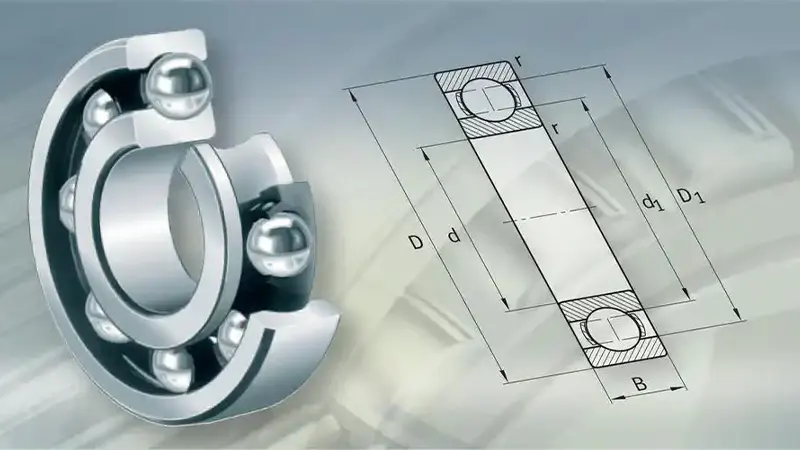
Points to Note in the Manufacture and Application of Deep Groove Ball Bearings
Deep groove ball bearings feature a simple structure and wide applicability; in both manufacturing and practical use, attention to detail directly impacts product performance and service life.
During production, strict control must be exercised over material quality, machining accuracy and heat treatment processes to ensure the surface finish of the raceways, the roundness of the balls and dimensional accuracy, thereby enhancing the bearing’s wear resistance and smooth operation from the outset. The assembly process must be carried out in a clean environment to prevent the ingress of foreign particles and ensure smooth, jamming-free rotation.
In practical applications, deep groove ball bearings are suitable for high-speed, low-noise equipment operating under light to medium loads. When selecting a bearing, the appropriate model and clearance must be chosen based on rotational speed, load and temperature conditions to avoid premature failure caused by incorrect selection. In high-speed motors and precision instruments, low-noise, high-precision bearings should be prioritised to enhance the overall quality of the equipment.
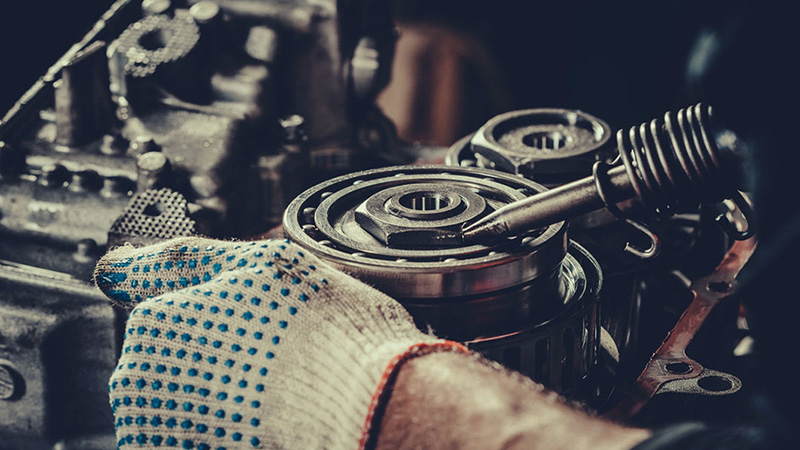
Whether in production or use, standardised procedures must be followed. Only by maintaining strict quality control, selecting the correct type, installing correctly, and carrying out regular maintenance can deep groove ball bearings perform reliably in equipment across various industries, ensuring efficient, long-lasting and safe operation.